
Buyer Guide
Condo Kitchen Remodel in Tampa: Rules, Permits & Cabinets
By the TC Wholesale Cabinetry Team · November 9, 2026 · 8 min read
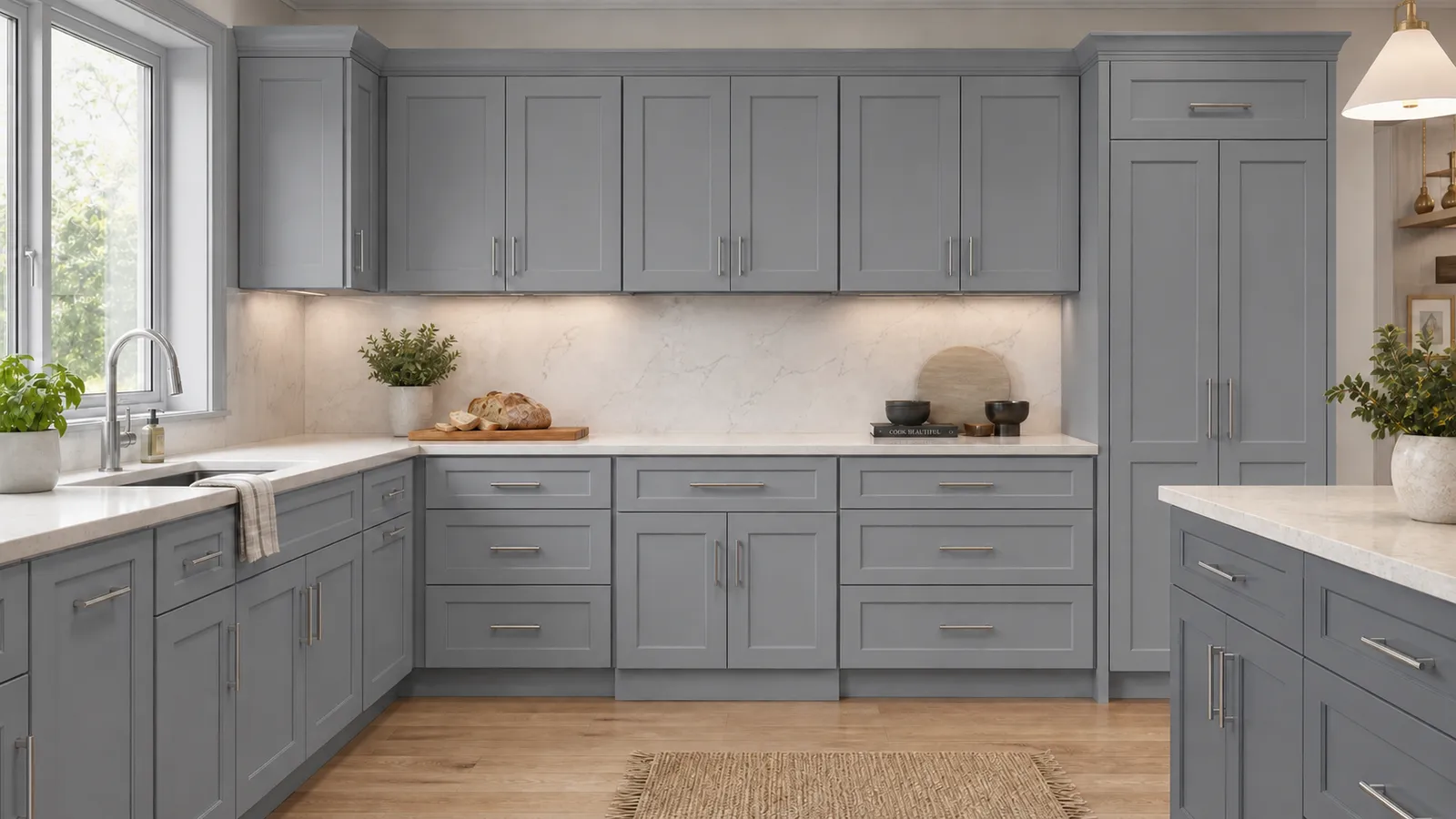
Short answer: start with your condo association, not the city. Most declarations require written approval before you remodel, and the association decides how contractors use the building. Then check the permit question. In the City of Tampa, a condo is permitted as commercial work even though people live in it. Swapping cabinets alone needs no building permit, because the city code exempts cabinetwork. Once the job moves plumbing, adds circuits or removes a wall, plan on a commercial permit pulled by a properly licensed contractor.
This guide walks through the association rules in Florida's condo statute, the City of Tampa permit rules for condo units, who insures built-in cabinets, and how to get new cabinets up a service elevator. Links to each statute and city document are at the end of the article.
Read your declaration and rules first
Florida Statutes section 718.113(2)(a) says there can be no material alteration or substantial addition to the common elements except in the manner the declaration provides. If the declaration is silent on the procedure, 75 percent of the total voting interests must approve before the work starts. A cabinet swap inside your unit is usually not a common-element change, but walls, risers, ducts through the exterior and shared plumbing stacks can be. Your declaration and the board's rules decide where that line sits in your building.
Section 718.113(3) adds that a unit owner may not do anything in the unit or on the common elements that would adversely affect the safety or soundness of the building. That is why boards look closely at wall removal and plumbing changes.
Associations commonly ask for some or all of the following. These are typical building rules, not state law, so get your own building's list from the manager:
- A written alteration or architectural application with a scope and drawing.
- A certificate of insurance from each contractor, often naming the association.
- A refundable damage deposit.
- A reserved service elevator slot and padding for deliveries.
- Set work hours and quiet days, plus rules on debris removal.
- A copy of any city permit before work begins.
Permits: why Tampa treats your condo as commercial
The City of Tampa's Residential Permits page says residential permits apply only to single-family homes and duplexes, and adds: "Although a condominium has a residential occupancy, a commercial permit is required."
The city's Condominium Alterations Permit Application Guide tells applicants to select the Accela record type "Commercial Building Alterations (Renovations)" for an interior remodel of an existing condo unit. Plans need the project address, the scope of work and a floor plan. If the scope removes a wall, a Florida-licensed architect or engineer must certify in a letter that it is non-load bearing; a load-bearing wall needs plans signed and sealed by an architect or engineer. If the building sits in a FEMA Special Flood Hazard Area, a FEMA Substantial Improvement determination must be submitted with the application.
The same guide states: "Residential contractors are not licensed to sign plans and perform work on condominium projects." When you hire for a permitted condo job, ask for a general or building contractor license, not only a residential one.
What stays permit-free: Tampa code section 5-105.2(1)(b), quoted on the city's Construction Services page, says floor covering, painting, cabinetwork, shelving and similar items "do not require a building permit regardless of the cost of the work." Replacing cabinets on the same plumbing and wiring falls here. Your association may still require approval. For the full Tampa permit rules, see our guide to permits for replacing kitchen cabinets in Tampa.
Who insures the cabinets
Section 718.111(11)(f)3 of the Florida condo statute says the association's property coverage must exclude, among other items inside the unit, floor, wall and ceiling coverings, electrical fixtures, appliances, water heaters, "built-in cabinets and countertops," and window treatments. In plain terms, the master policy does not pay to replace your kitchen cabinets.
Section 718.111(11)(g)2 adds that unit owners are responsible for the cost of reconstructing the portions of the property they are required to insure. Before you install new cabinets, call your own insurance agent, tell them the replacement value of the new kitchen and confirm your unit-owner policy covers it. Keep the receipts.
Getting cabinets up the elevator: RTA vs assembled
Condo deliveries are where kitchen projects stall. An assembled base cabinet is a rigid box that has to tilt through doorways, fit a service elevator car and turn tight hallway corners without dinging walls you share with neighbors. A tall pantry is the hardest piece, because it cannot be tipped on end in many elevators.
Ready-to-assemble (RTA) cabinets arrive flat-packed: panels, doors and drawers in cartons that stack on a dolly and stand upright in an elevator. You carry them in during your reserved elevator slot and assemble them inside the unit, so the finished boxes never travel through common hallways. Measure the elevator door opening, car depth and diagonal before the order, and ask us for the carton sizes of the specific SKUs you plan to buy.
Our cabinets are all-plywood RTA Shaker cabinets made in our own factory in Vietnam: a 1/2" plywood cabinet box with metal L-brackets and no particle board, a 3/4" solid-wood face frame and soft-close drawer slides. They are CARB P2 compliant. Pickup is at our Tampa warehouse at 6419 N 50th St, Tampa, FL 33610. Read what RTA cabinets are and how assembly works in our RTA guide.
Sizing a condo kitchen with standard cabinets
Most condo kitchens are galleys or L-shapes, which suit stock sizes well. Base cabinets come in 3-inch width steps, so a run can usually be filled with standard boxes plus a filler strip at a wall.
For wall cabinets, our line includes 30-inch, 36-inch and 42-inch heights (for example W3030, W3036 and W3042). Under an 8-foot ceiling, 30-inch or 36-inch uppers are the usual choice; 42-inch uppers suit taller ceilings. Measure your ceiling before choosing, since some condo buildings have dropped soffits.
- Sink base: the SB33 and SB36 fit most condo sinks; measure the existing drain centerline so the plumbing does not move.
- Fillers: FILLER3X96 and FILLER6X96 close gaps at walls and give doors room to open.
- Pantry: tall units such as the WP188424 or WP308427 add storage where a galley has no room for more uppers.
Licensing: who can do the work
Florida Statutes section 489.117(4)(a)1 says a local government may not require a state or local license to obtain a permit for job scopes that do not need a state license, and it lists cabinetry, painting, flooring and handyman services among them. Installing cabinets therefore does not require a contractor license.
Plumbing, electrical and structural work is different. Those trades need licensed contractors, and the City of Tampa's condo guide expects a Florida-licensed general or building contractor (or an architect or engineer) on condo plans. Check any license number on the Florida DBPR licensee search before you sign.
A condo cabinet timeline
A typical order of steps for a cabinet-focused condo kitchen:
- Read the declaration and rules, then submit the association's alteration application.
- Decide whether the scope stays permit-free (same plumbing and wiring) or needs a commercial permit.
- Measure the room, ceiling, drain centerline and elevator.
- Plan the layout and order. Our free quote service can check a cabinet list.
- Book the service elevator, then pick up at our Tampa warehouse.
- Assemble inside the unit and install.
FAQ
Do I need HOA approval to replace condo kitchen cabinets in Tampa? It depends on your declaration and rules. Florida law sends material alterations to common elements through the declaration's procedure, and most associations ask for an application before any interior remodel. Ask your manager in writing.
Does a condo remodel in Tampa need a permit? Cabinetwork alone does not need a building permit under Tampa code 5-105.2(1)(b). Work that needs a permit in a condo unit is filed as a commercial permit, not a residential one.
Who pays if new cabinets are damaged in a condo leak? Florida law requires the association's master policy to exclude built-in cabinets and countertops inside the unit, so your own unit-owner policy is the one to check.
Can RTA cabinets fit in a condo elevator? Flat-packed cartons are far easier to move through elevators and hallways than assembled boxes. Ask us for the carton sizes of your SKUs and compare them with your elevator.
Can I do my own condo remodel? Cabinet installation needs no contractor license in Florida. Your association may still set its own contractor rules, and plumbing, electrical or wall changes need licensed trades and a permit.
Questions about your project?
Talk to our Tampa team about sizes, finishes, and free door samples, or browse the in-stock catalog of all-plywood Shaker cabinets.